
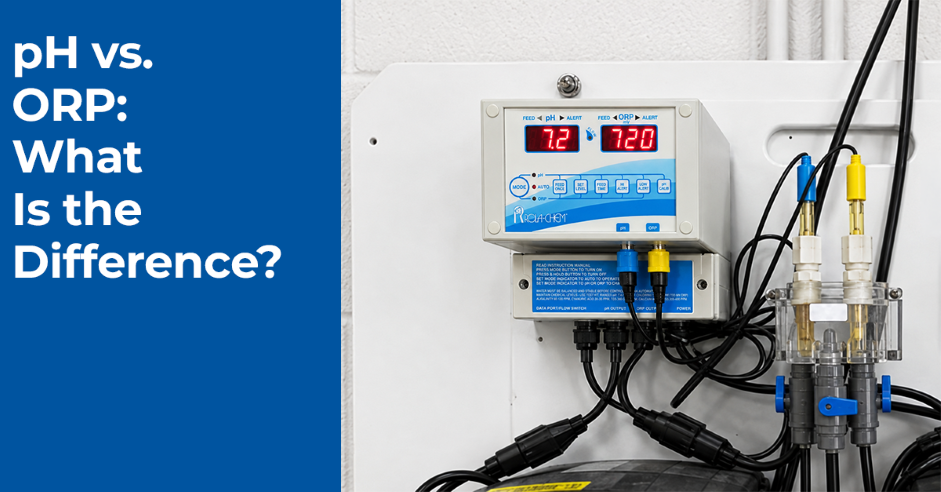
Pool professionals rely on automated systems to maintain precise water chemistry, especially in high-traffic commercial pools and spas. Understanding the difference between pH and ORP, and how they work together, is fundamental to maintaining clean, properly balanced water. In this blog, we’ll break down the difference between pH and ORP, explain how they relate to active disinfection and cover the basics of monitoring and balancing water chemistry.
What Are pH and ORP?
Maintaining proper water chemistry requires monitoring both sanitizer levels and the conditions that affect sanitizer performance. While Free Available Chlorine (FAC) measures the amount of available chlorine in the water, pH and ORP provide additional insight into how effectively that sanitizer is working.
pH measures the acidity or alkalinity of the water and directly affects sanitizer effectiveness. ORP, or Oxidation-Reduction Potential, provides an indication of the water’s ability to oxidize contaminants such as bacteria and organic matter.
For example, a technician may measure an acceptable FAC level in a commercial spa while the ORP reading remains low. Understanding what pH and ORP readings indicate can help technicians determine whether additional sanitizer is actually needed or whether another aspect of the water chemistry requires attention.
The Basics: pH
The pH of water is measured on a scale from 0 to 14. For pool and spa water, the ideal range is generally around 7.2–7.8. Rola-Chem systems have a factory-set pH setpoint of 7.4, helping maintain a balance between swimmer comfort and effective sanitization.
Measuring and balancing pH is important for maintaining treatment effectiveness and protecting pool and spa equipment:
- Low pH (acidic)
- Water becomes more acidic, which can irritate the eyes and skin and contribute to corrosion of pool surfaces or equipment
- On Rola-Chem systems, a low pH alert activates when the pH reaches 7.0
- High pH (alkaline)
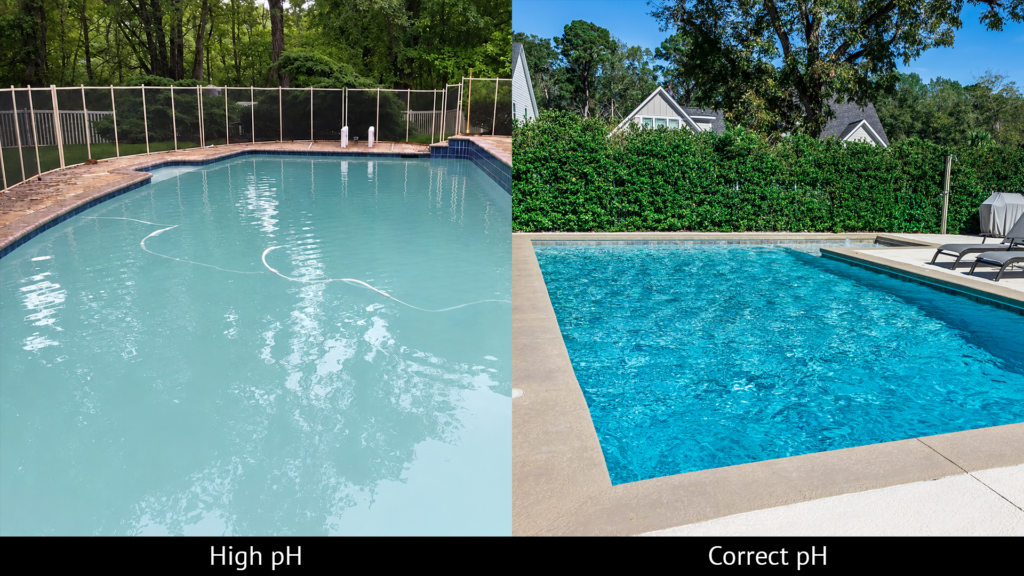
- Sanitizer becomes less effective as pH increases, even when chlorine levels are within range
- Cloudy water and scale buildup can also occur when pH is too high
- A high pH alert can activate when the pH reaches 8.0
Water pH can fluctuate as rainfall, aeration, bather load and chemical additions cause changes over time. This is why continuous monitoring can be especially valuable in high-traffic environments where water chemistry can change quickly.
The Basics: ORP
ORP is measured in millivolts (mV) and indicates the water’s oxidation potential. In pool and spa applications, an ORP reading between 650-750 mV is generally considered a target range for effective disinfection.
A pool may have measurable free chlorine while still showing a low ORP reading. This can indicate that the sanitizer is not providing the expected level of oxidation and that other water chemistry factors may need to be addressed.
When it comes to understanding ORP and water chemistry, there are several key points to keep in mind:
- It reflects oxidation potential rather than simply measuring sanitizer concentration
- It is influenced by pH
- As pH increases, ORP generally decreases
- Readings below certain levels, such as 650 mV, may indicate that sanitizer effectiveness needs to be evaluated, even when chlorine levels appear to be within range
How pH and ORP Work Together
pH and ORP are closely connected. As pH increases, ORP generally decreases, which can reduce the effectiveness of chlorine as a sanitizer. Maintaining the proper balance between these two measurements helps support effective disinfection while protecting pool surfaces and equipment.
Keeping pH within the recommended 7.2–7.8 range helps prevent the problems associated with water that is too acidic or too alkaline. Maintaining an appropriate ORP level also provides an indication that the water has sufficient oxidation potential for effective disinfection.
Monitoring pH and ORP together gives pool professionals a more complete picture of water chemistry and can help identify changes before water quality noticeably declines. When these measurements remain within their target ranges, facilities can also avoid unnecessary chemical additions and improve overall operating efficiency.
How to Monitor and Balance Your Water
Manual dosing schedules may not account for rapid changes caused by heavy bather loads, rainfall, aeration or other variables. High-traffic commercial pools and spas can benefit from active, continuous monitoring and chemical adjustment.
An ORP and pH controller monitors both values in real time and automatically dispenses chemicals as needed to help maintain target parameters.
Automated dosing with Rola-Chem helps reduce the guesswork associated with manual chemical management:
- Automated Dispensing
- Precise chemical dosing helps maintain consistent water chemistry and can reduce unnecessary chemical use
- Data Tracking
- Recording pH and ORP readings over time helps managers identify trends and make informed adjustments to their water treatment process
- Sensor Maintenance
- Regular probe calibration and maintenance help ensure accurate readings and reliable system performance
Rola-Chem’s Ready-to-Mount Systems integrate the components needed to monitor and balance water chemistry, including pumps, controllers and accessories. These pre-assembled systems simplify installation and help reduce connection errors.
Contact Rola-Chem to Learn More
Understanding the difference between pH and ORP is an important part of managing pool and spa water chemistry. The right automated equipment can help turn that knowledge into more consistent monitoring, more precise chemical dosing, and reliable water quality.
With more than 60 years of experience serving pool and spa professionals, Rola-Chem can help you identify the right solution for your application. Whether you’re evaluating options for a new installation or looking to upgrade an existing system, reach out to our team to learn more.